Crispy Garlic Butter Chicken Thighs: Restaurant Quality, Home Kitchen
This is a restaurant dish.
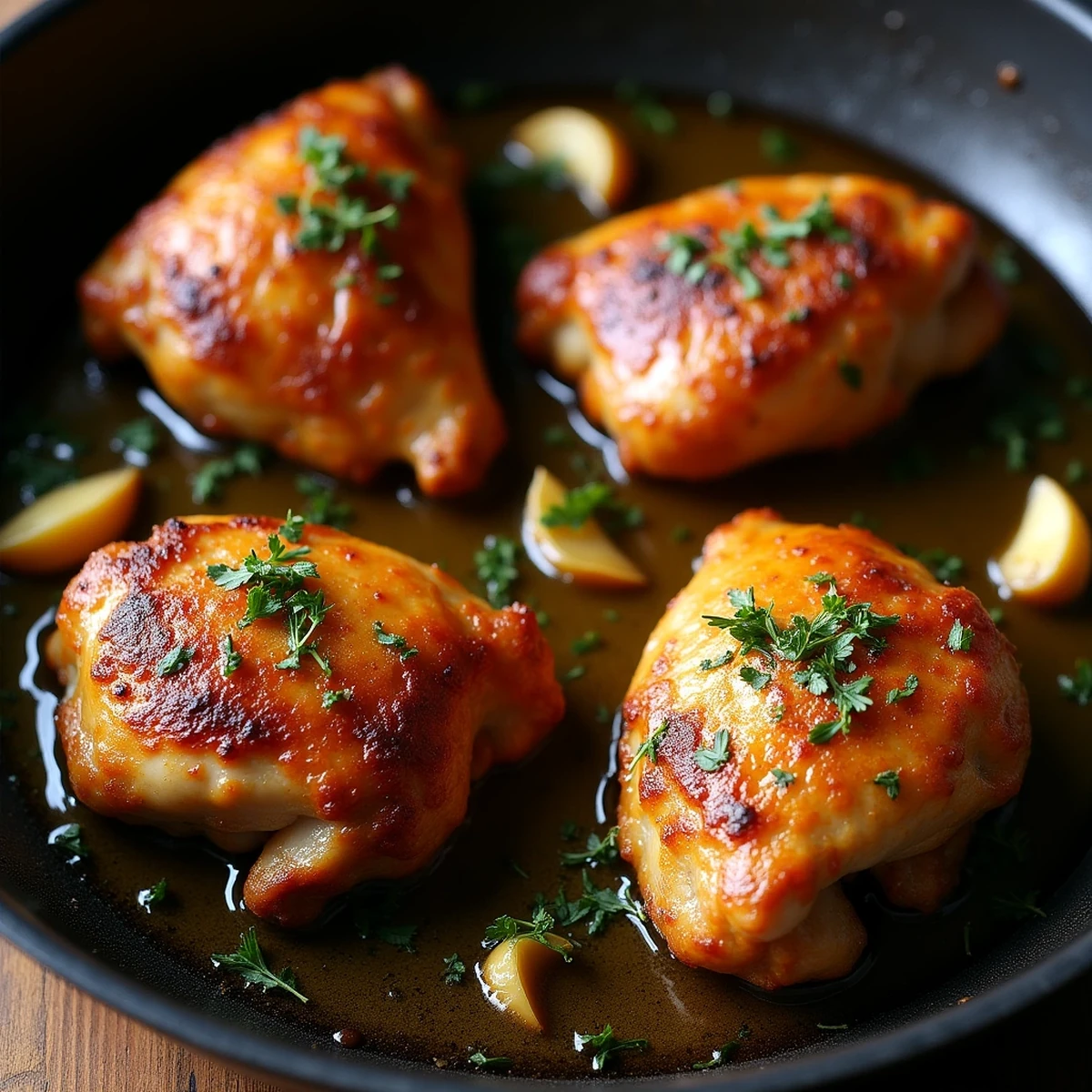
This is a restaurant dish. And you’re making it at home tonight.
Crispy garlic butter chicken thighs are what I reach for on a Tuesday when the week has been long and I decide — mid-afternoon, usually while staring at the ceiling of my home office — that tonight deserves something extraordinary. Not a weeknight dinner. An event. The technique is one I learned in my first month at the restaurant: starting the thighs skin-side down in a cold pan, then letting the heat climb slowly so the fat renders completely before the skin ever gets a chance to steam. The result is a shatteringly crisp skin — the kind that makes a sound when you cut into it — over chicken that stays impossibly juicy. Then the butter baste. That’s the technique that changes everything here, and I’ll walk you through every second of it.
The garlic butter sauce that builds in the pan is, genuinely, one of the finest things I know how to make. Fond from the chicken, shallots, garlic that has bloomed in the rendered fat, white wine, good French-style butter, and fresh thyme. It takes seven minutes to build after the chicken comes off. Your guests — or just you, alone, with a glass of something cold and a candle you lit for no reason other than you wanted to — will not believe you made this.
I used to sell a version of this at the bistro for $34. You’re going to make it for about $9. Date night. Dinner party. Tuesday night when you decide you deserve something extraordinary. This is that recipe.
Ingredients
- 4 bone-in, skin-on chicken thighs (approximately 200g each), patted completely dry
- 1½ teaspoons flaky sea salt
- 1 teaspoon freshly ground black pepper
- 6 cloves garlic, smashed and peeled
- 3 shallots, finely sliced
- 60g French-style butter (82%+ fat content), cut into cubes, cold
- 2 tablespoons extra-virgin olive oil
- 120ml dry white wine (something you’d actually drink — a Chardonnay or Sauvignon Blanc)
- 120ml good-quality chicken stock
- 6 sprigs fresh thyme
- 1 teaspoon Dijon mustard
- Juice of half a lemon
- 2 tablespoons fresh flat-leaf parsley, finely chopped, for finishing
Instructions
-
- Remove the chicken thighs from the refrigerator 30 minutes before cooking. This is not optional — a cold thigh hitting a hot pan cooks unevenly. While they come to room temperature, pat them thoroughly dry with paper towels on both sides. Moisture is the enemy of a crisp skin. Season generously with flaky salt and black pepper on both sides, pressing the seasoning in with your fingers.
-
- Place a carbon steel or heavy stainless steel pan on the stovetop — do not turn on the heat yet. Add the olive oil and lay the chicken thighs skin-side down in the cold pan. Now turn the heat to medium. Starting in a cold pan allows the fat to render slowly and completely, which is the technique that creates a truly shatteringly crisp skin rather than a chewy, steamed one.
-
- Cook the chicken thighs skin-side down without moving them for 20 to 24 minutes. You’ll hear the sizzle deepen and mellow as the fat renders. Check occasionally by pressing gently — the skin should release naturally from the pan when it’s ready. Do not force it. Do not touch it. Let the heat do its work. The skin should be deep golden-brown and completely rendered before you flip.
-
- Flip the thighs and cook flesh-side down for 4 to 5 minutes, until the internal temperature reads 74°C (165°F) on your digital thermometer. Transfer the chicken to a wire rack — not a plate — and let it rest uncovered for 5 minutes. Resting on a rack keeps the skin dry and crisp from underneath. This is the detail that most home cooks skip, and it matters.
-
- Pour off all but about 1 tablespoon of the rendered chicken fat from the pan. Return the pan to medium heat. Add the shallots and cook, stirring, for 2 minutes until softened. Add the smashed garlic cloves and the thyme sprigs. Cook for another 60 seconds — you’ll smell the garlic bloom in the fat, which is exactly what you want.
-
- Now — and this is the technique that changes everything — deglaze the pan with the white wine. Pour it in and immediately scrape the bottom of the pan with a wooden spoon to dissolve the fond. All of those browned bits lifting off the pan are concentrated flavor. Let the wine reduce by half, about 2 minutes.
-
- Add the chicken stock and the Dijon mustard. Stir to combine and let the sauce reduce for 3 to 4 minutes until it coats the back of a spoon. Remove the thyme sprigs. Turn the heat to the lowest setting.
-
- Add the cold butter cubes one at a time, swirling the pan continuously between each addition. Do not stop swirling. The cold butter and the motion create an emulsion — the sauce will thicken, turn glossy, and coat everything like silk. This is a restaurant technique called mounting with butter (monter au beurre), and it is entirely achievable at home. Finish with the lemon juice and taste for salt.
-
- Return the rested chicken thighs to the pan, skin-side up. Spoon the sauce over the flesh but keep the skin clear — you’ve worked for that crisp, and sauce will soften it. Scatter the fresh parsley over the top. Serve immediately, directly from the pan.
Nutrition
Tips
1. Dry the chicken thighs more than you think you need to. I press paper towels firmly onto the skin and repeat twice. Any residual moisture creates steam in the pan, and steam is what stands between you and a crisp skin. If you have time, season the thighs and leave them uncovered on a rack in the refrigerator for two to four hours before cooking. The refrigerator air draws out additional surface moisture. The result is remarkable.
2. Trust the cold-pan method — and resist the urge to move the chicken. The single most common mistake I see home cooks make is flipping too early or pressing down on the skin impatiently. When the skin is ready, it will release from the pan on its own. If it resists, it needs more time. The rendered fat will pool around the thighs as they cook — this is correct. You’re essentially pan-frying in the chicken’s own fat, which is a better basting medium than anything you could add.
3. Use cold butter, added slowly, for the sauce. Warm or room-temperature butter will break the emulsion and you’ll end up with a greasy, separated sauce rather than a glossy one. Keep the butter in the fridge until the moment you need it, cut it into small cubes, and add it one piece at a time while swirling the pan off or barely on the heat. My mother would do this by feel after forty years in her kitchen. The thermometer and the visual cue — a sauce that looks like it could coat a spoon — will get you there. (My mother is also never wrong, but she had forty years. You have this recipe. Both are valid.)